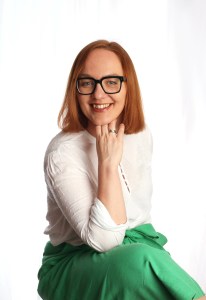
Photo/Falco Studio
Prof. Małgorzata (Gosia) Swadźba-Kwaśny is a Professor of Inorganic Chemistry and the Director of the QUILL Research Centre at the School of Chemistry and Chemical Engineering, Queen’s University Belfast.
She obtained her MSc (2005) from the Silesian University of Technology, Poland (Chrobok group), and her PhD (2009) from the QUILL Research Centre at Queen’s University Belfast (Seddon group).
Gosia started her independent research career in 2015, as a QUB Vice Chancellor’s Research Fellow in Green Chemistry. She was promoted to a Senior Lecturer in 2019 and to a Professor in 2021. Gosia has been the Director of the QUILL Research Centre since 2018 and the Director of Research in the School of Chemistry and Chemical Engineering since 2022.
Gosia’s research interests lie in ionic liquids and other advanced liquid materials. She is particularly interested in Brønsted and Lewis acids and liquids with high metal concentrations. Gosia collaborates extensively with ISIS Neutron and Muon Source and Diamond Light Source to access advanced neutron scattering and X-ray spectroscopic techniques for the study of the liquid phase. Her group is engaged in a range of applied projects on catalysis, electrolyte design and metal separations and design of technological fluids (lubricant oils and additives, phase change materials). Gosia has an extensive experience in applied research projects in collaboration with industrial partners such as PETRONAS, The LYCRA Company, Chevron and Ionic Technologies. These projects explore the use of ionic liquids and other functional liquids as more sustainable alternatives to conventional catalysts and solvents.
Gosia teaches undergraduate Inorganic Chemistry (Main Group Chemistry in CHM1206 and Inorganic Materials in CHM3001) and postgraduate Pharmaceutical Analysis (Thermal Analyses in CHM7102 and NMR Spectroscopy in CHM7103).
Gosia is a Member of the Royal Society of Chemistry. She has a long-standing collaboration with the ISIS Neutron and Muon Source, having served as Facility Access Panel Member and subsequently Chair, and representing the Disordered Materials community at ISIS User Meetings. She serves as a member of the Editorial Board for IOP Sustainability Science and Technology.
Further links:
 Swadźba-Kwaśny Lab